

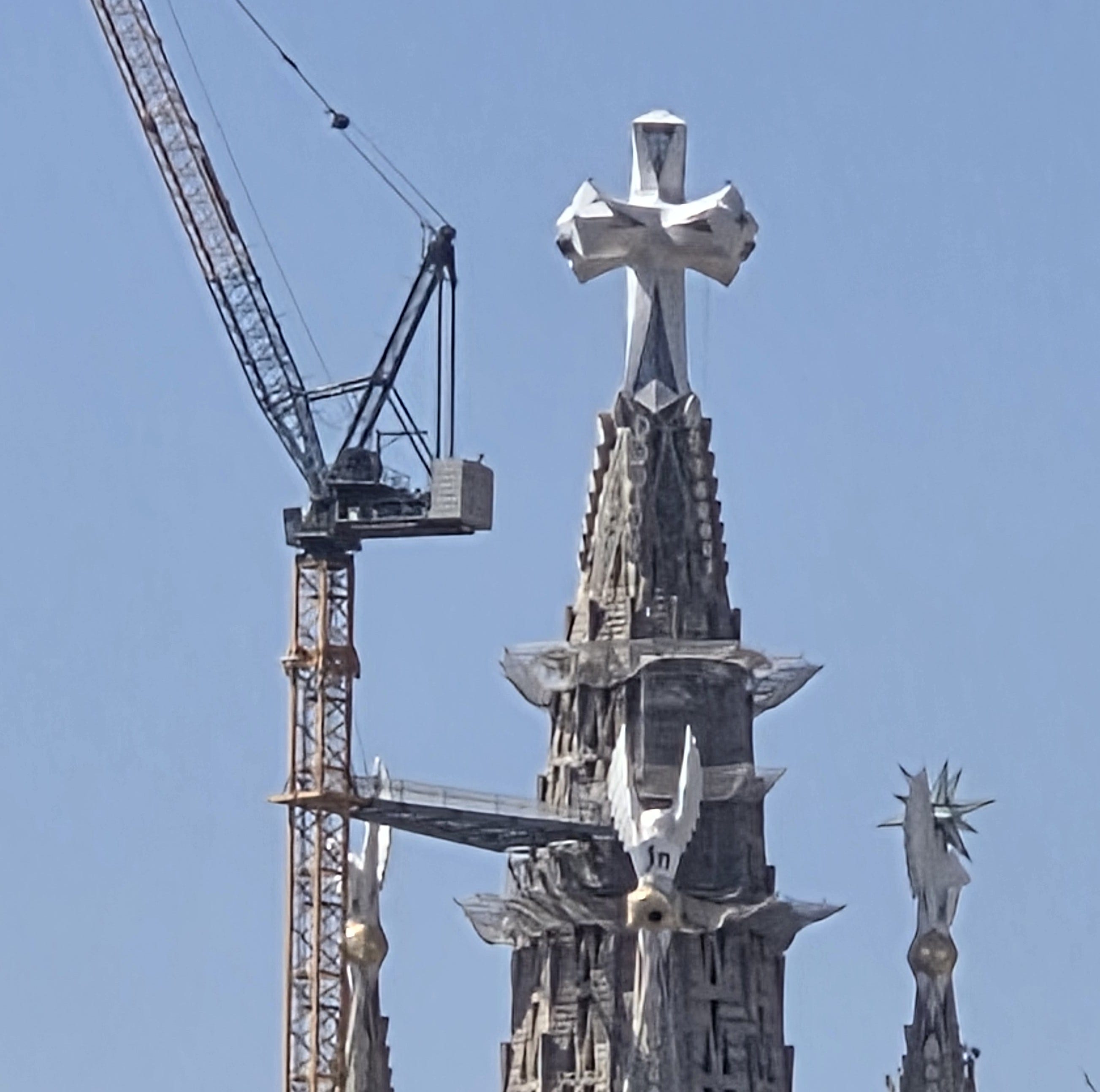
Barcelona marked a major milestone in the saga of the perennially unfinished Sagrada Familia in June, when Antoni Gaudí’s grand achievement was officially ordained as “the world’s tallest church.” The celestial-terrestrial mashup festival featured a visit by the Pope, a citywide Gaudí fiesta and a massive multimedia drone fireworks and light show that became a viral hit.
Amid the hoopla, there was the underlying vibe that we were all celebrating the completion of Sagrada Familia, the world’s longest on-going construction project. All the spires were topped off with glowing crosses; every bit of symbolic ornamentation had been carved into the façade. Gaudí’s vision had burst into life with the Pope’s blessing and a 3D can-you-top-this, bombs-bursting-in-air extravaganza. (And I’m guessing the notoriously humble Gaudí would have hated it.)
Everything about the ceremony suggested this was Sagrada Familia’s grand ribbon cutting, the final dramatic end of the Sagrada construction story. People could rejoice that through artistry, perseverance and incredible sums of money, the great church was actually done. Headlines proclaimed that Gaudí’s epic church was finally finished. (Sample from Forbes: “Barcelona’s Sagrada Familia, Completed After 144 Years…”).
Except everyone in Barcelona knows it’s not. Not even close.
During June’s hoopla, lead architect Mauricio Cortés moved to deflate the “Sagrada is finished” narrative.
“I’ve read a few headlines that said that, this year, the Sagrada Familia will be completed,” Cortés told Dezeen. “However, the case is that the central towers will be completed with the Jesus tower, but then there are future challenges ahead.”
At the top of the “future challenges” to-do list is completion of the Glory Facade and a “Grand Staircase,” a 60-meter platform that would extend across an existing street, Carrer de Mallorca. The staircase would connect the raised Sagrada entrance to the street level, but would require the absorption and destruction of several existing residential and retail buildings. Estimates suggest current plans would displace about 200 to 300 families.
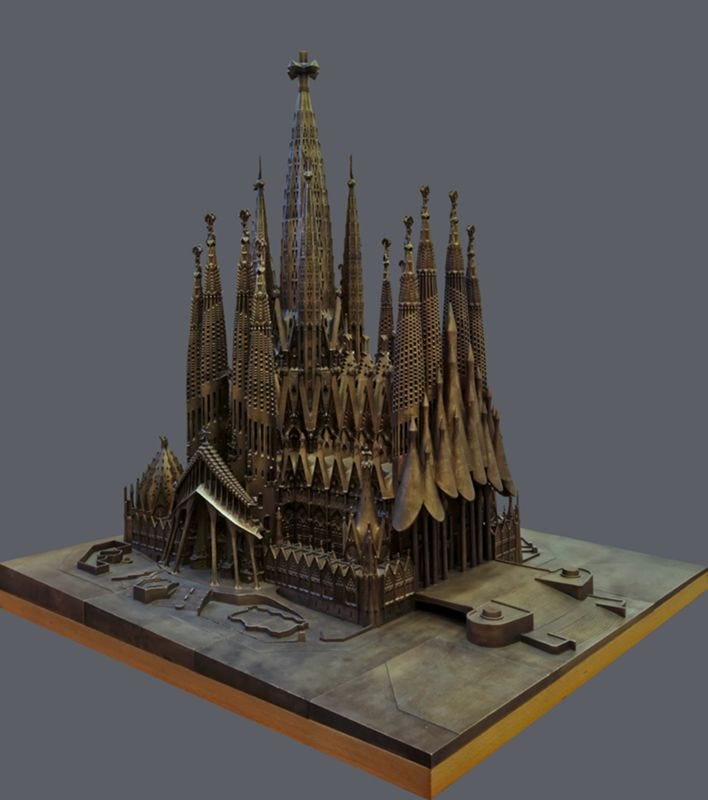
Now that the main work on the basilica is finished, the La Sagrada Família Foundation, the private non-profit group that controls the church’s construction, has made it clear it intends to push forward with the plan for the Grand Staircase, which has been a source of dispute and controversy for decades. Organized, passionate neighborhood opposition groups are in place to oppose the church’s expansion plans, and they have a strong case.
Beyond the unfairness of tearing down homes and businesses, they argue the evidence is hazy that Gaudí was even that interested in the staircase. The platform and stairs appear in his early models, but many elements changed over the years.
“These stairs are not Gaudí’s and they were designed later by his disciples to have an excuse to ask for donations,” Salvador Barroso, president of People Affected by the Construction of the Sagrada Família, a neighborhood group told Catalan News in 2021.
But the church foundation counters that the staircase is essential to achieve Gaudí’s ultimate vision. Few of his drawings or models survived a Civil War-era anarchist attack, but the church says the staircase was always part of the plan. They point to one the original models of the church, subsequent drawings and a 1916 permit application which clearly include the staircase.
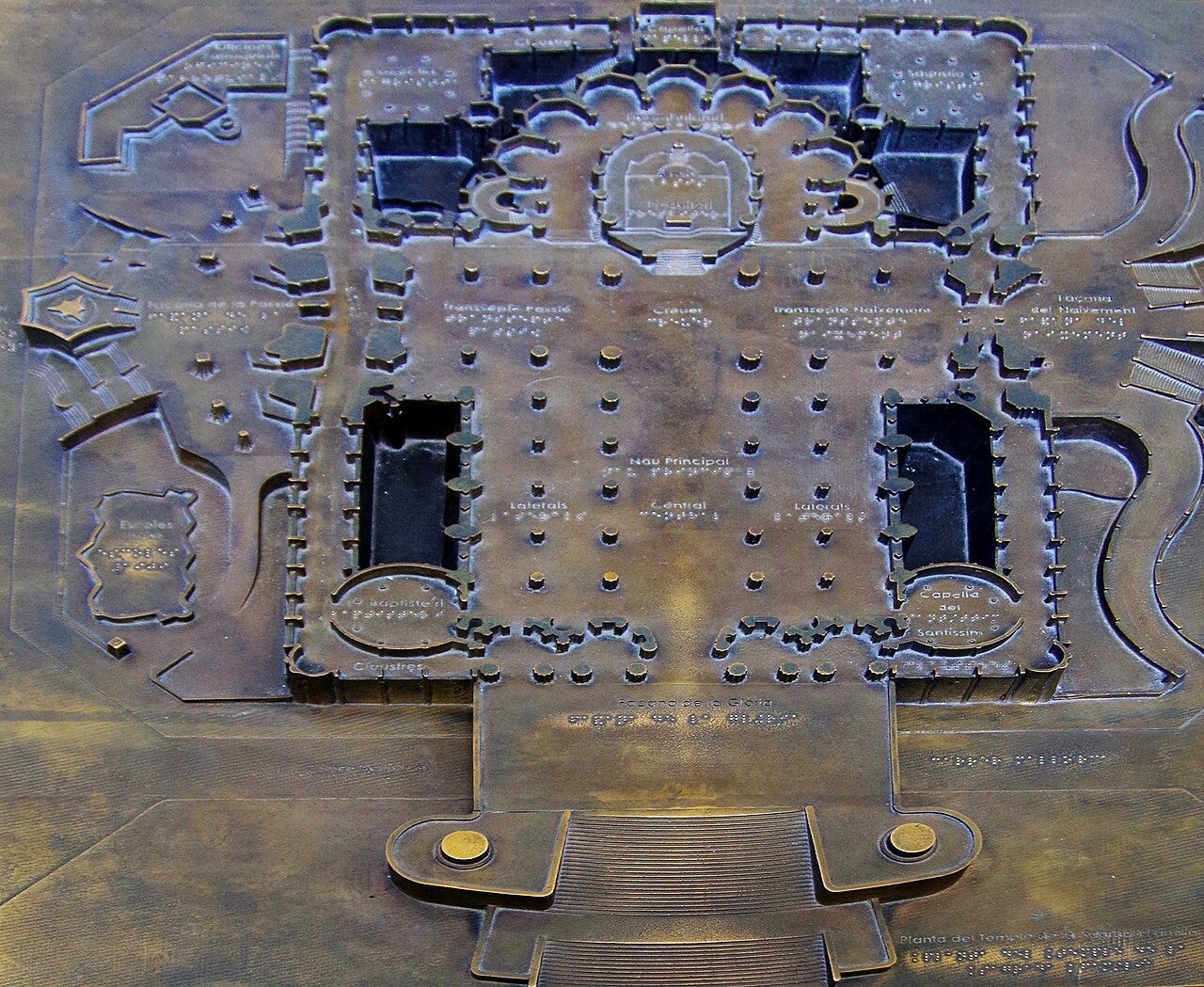
Supporters argue that Gaudí specifically designed the church four feet above the road with the intent that the staircase would connect the basilica to the street level. Taking it a symbolic step further — because there is always a symbolic step further with Sagrada — the underside of the staircase is meant to symbolize hell and the area above the stairs the ascension to heaven, church officials say. Plans call for many, many symbolic elements in the Glory Facade package, including very symbolic depictions of the Seven Deadly Sins and the Seven Heavenly Virtues.
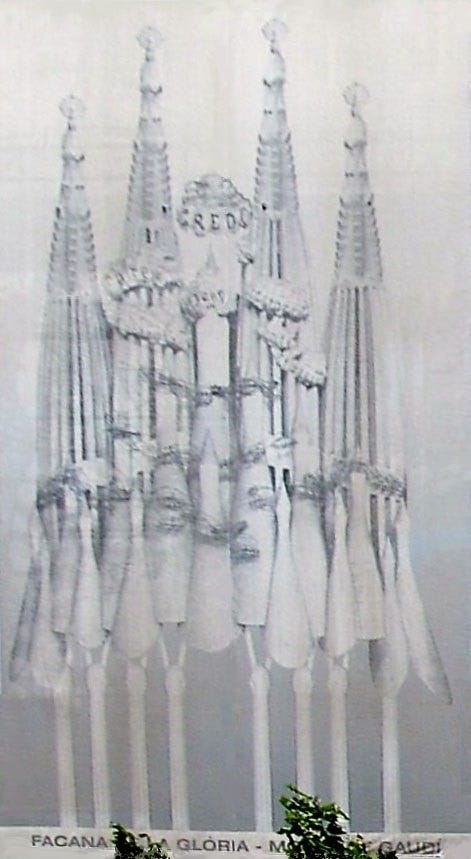
In Barcelona, everyone knows this has been coming. The grand staircase and its potential impact on the surrounding land already have been the subject of lawsuits and controversy. Several of the affected buildings were built in the 1960s and ‘70s, when the notoriously corrupt pro-Franco regime ignored the church’s plans and turned over the land to private developers. The city and courts backed the developers’ argument that the church couldn’t prove the staircase was part of Gaudí’s vision.
At the time, nobody thought the church would ever be finished, so it didn’t really matter. Many of the buyers who bought homes in the residential buildings constructed reportedly were warned about the potential for the church to expand, but moved forward anyway, according to news reports.
But now the miracle has happened. The main portion of the basilica is completed and the church foundation is ready to move forward with its plan.
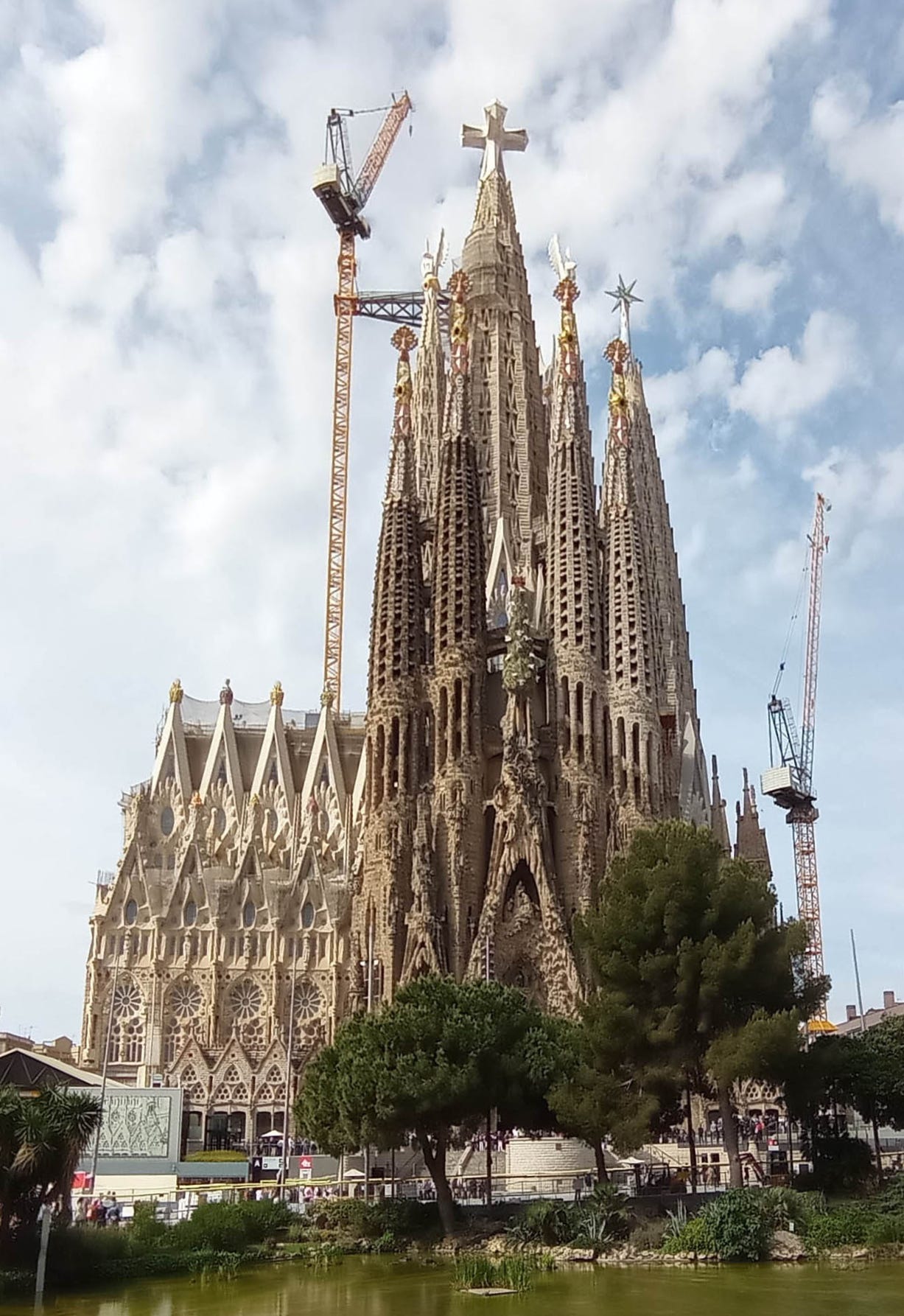
The dispute will spotlight Barcelona’s traditional rivals — the church and the socialist party, which currently dominates local government. And, as always in Barcelona, it’s complicated. The process will unfold against a backdrop of years of poorly executed gentrification throughout the city, which has destroyed old neighborhoods and contributed to soaring home prices.
The current city council, which typically tries to promote the rights of working-class residents, has vowed that no plan will be approved until all the existing residents are guaranteed homes. But that’s always a tricky process, especially for elderly families that have lived in their home for years. (Some owners have expressed a willingness to sell and move, according to news reports.) At the same time, city planners see an opportunity to improve traffic flow and the pedestrian experience around Sagrada, one of the world’s biggest tourist attractions.
By some estimates, the staircase and its associated elements could take 10 years to plan and build, at least. Given the circumstances and realities of Barcelona, let’s assume that Sagrada is nowhere close to be finished.
More from Barcelona Anarchy…

