

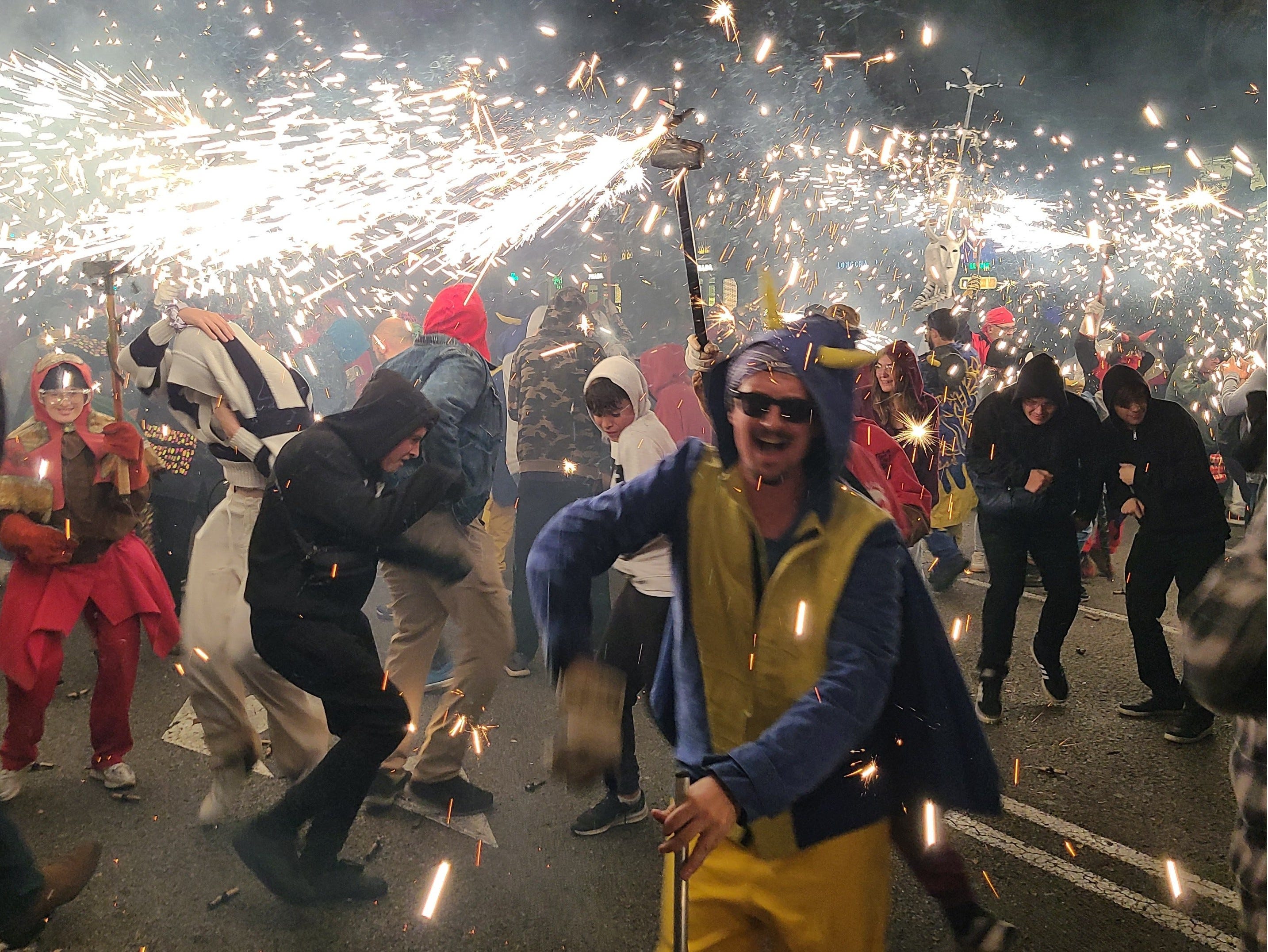
Spain is a cornucopia of wild festivals, celebrating everything from raging bulls to squishy tomatoes. Barcelona alone trots out a steady stream of traditional fiestas, which provide a great excuse for reckless merriment and blowing up shit.
That said, one festival stands out on the calendar, the annual event regarded as “the big one.” If you’re jonesing for that big festival Spain experience, this is the one you don’t want to miss.
Known simply as La Mercè, the annual festival at the end of September brings together all the elements of traditional Catalan festivals into a five-day marathon of continuous performances, events and general mayhem.
La Mercè covers all the bases. If you’re looking for a Burning Man, lets-do-mushrooms-and-dance-in-the-streets kind of vibe, you’ll find it. if you want a more cultural, folksy experience, reflecting local communities and old Catalan traditions, you’ll find that, too.
On a simple level, the festival marks the end of the summer, the bookend to the Sant Joan Festival in June, which hails the beginning of summer with bonfires in the streets and gratuitous amounts of explosions. (Catalan festivals always display a real zeal for explosions. Even the craziest, batshit fireworks lover in Waco, Texas, confronted with a Barcelona festival, would take a step back and say, “whoa, you guys really need to take it down a notch.”)
The origins of La Mercè can be traced to a plague of locusts, which is very on brand for Barcelona. Many of the city’s most storied traditions, heroes and myths stem from some sort of tragedy or noble cause that went horribly wrong. In the case of La Mercè, in 1687 city leaders prayed to Our Lady of Mercy for relief from the swarming locusts, which were devastating crops and wreaking havoc, in general.
When their prayers were answered and the locusts miraculously disappeared, the city repaid Our Lady of Mercy by naming her Barcelona’s patron saint, a move blessed 200 years later by the Pope. (The legend of the Virgin Saint of Barcelona goes back to 1218, when three people saw a vision of the Virgin Mary urging them to found an order to save another Christian sect and… it’s complicated.)
“Fiestas do not seem to me to be celebrations of the past. Some are genuinely spiritual, religious affairs. Others are expressions of local pride or chauvinism. Most, however, are about fun.” -Giles Tremlett, author of “Ghosts of Spain.”
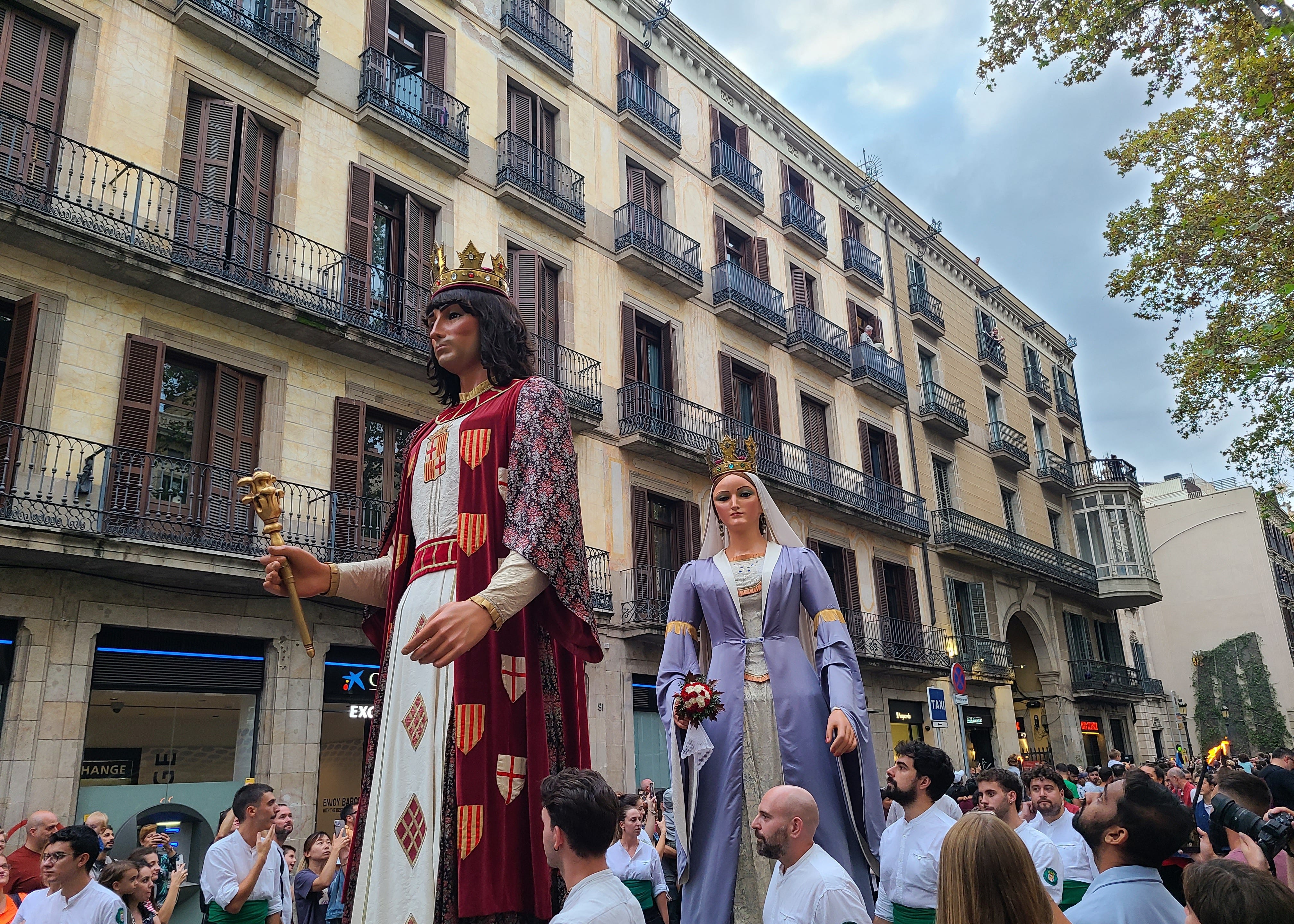
The modern La Mercè festival flows into every community in the city, although most of the big events are centered around the Gothic Quarter. Every day features a full calendar of dancers, musicians, gigante parades and cultural events spread around the neighborhoods. The festival may be staged on a grand corporate scale these days, but there is still a low-key, community vibe to many of the annual festivities. Clubs, community groups and families spend months preparing for the festival, just as their families before them. Children walk in the parades with their parents, who walked with their parents. Drunken frat boys follow the paths of drunken frat boys of yore.
The festivities conclude with a massive “piromusical,” a grand display of synchronized fireworks music that rivals New Year’s Eve for explosions on a grand scale. I highly recommend skipping the crowds and noise of the piromusical.
For most fans, the festival really focuses on three must-do events, quintessential elements of the Barcelona festival experience.
Follow the Beat
Opening night is highlighted by the parade of drum corps that pound through the streets of the old district, usually starting in El Born. A conga line forms behind the drummers and dancers and giant figurines of dragons and beasts. You can’t help but fall into line and join the procession, pounding along with the drummers.
Throughout the festival, these drum groups randomly pop up in the district and start a march.
They represent their communities; people from all walks of life who have found their common rhythmic obsession. Together, they are finely-tuned instruments and competitive-good, ready to show off and start the party with a drum march. Their pounding beats create a great throbbing, interactive flow to the events. It’s a wonderful, communal experience.
Behold the Human Pyramids
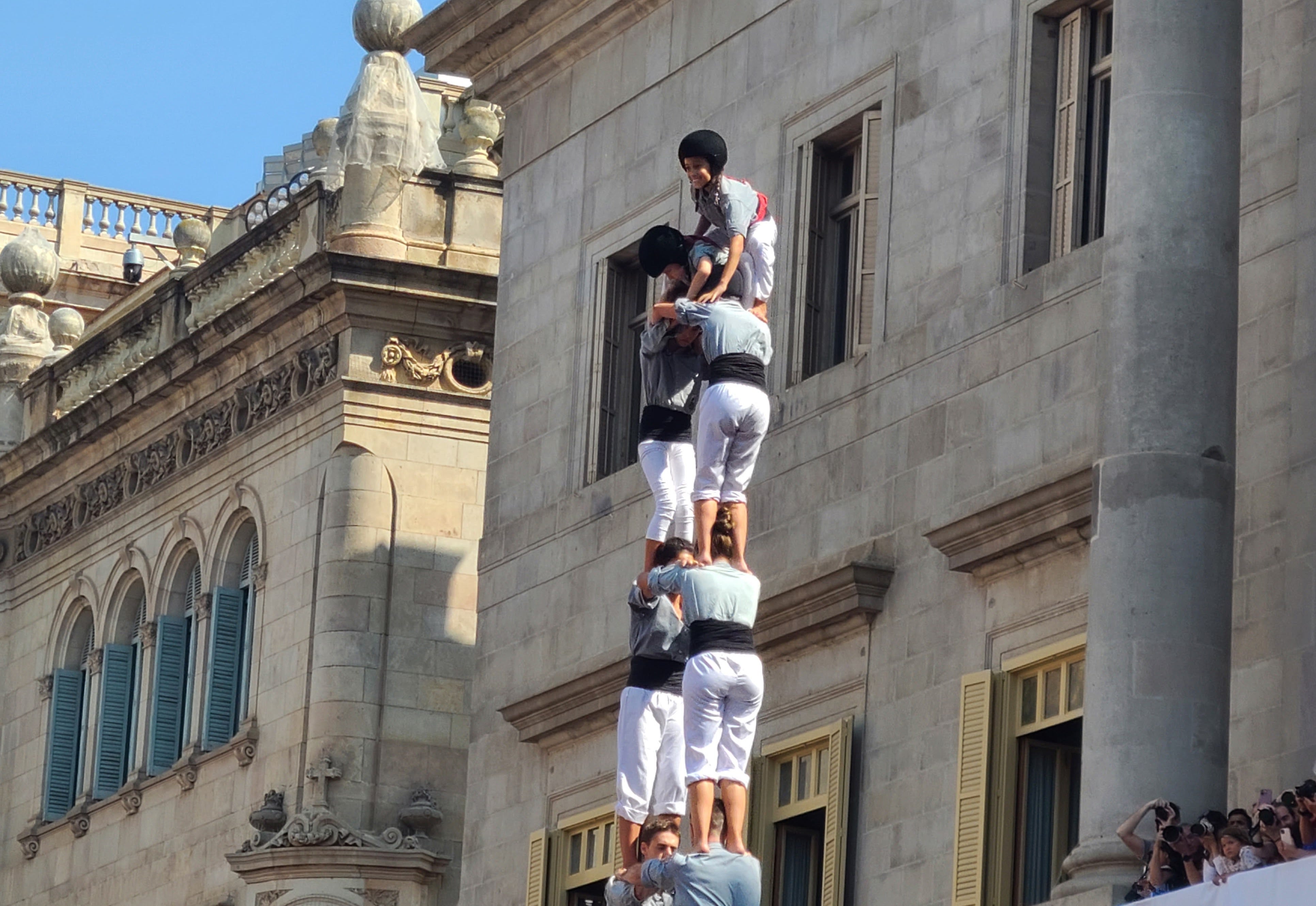
If you spend any time thinking about it, castellers are really one of the wackier regional customs. Forming massive human pyramids and then urging little children to scamper to the top doesn’t seem like healthiest of cultural traditions. (“Don’t worry, the six-year-old is wearing a helmet!”) Nevertheless, castellers are a deeply rooted institution in villages and towns throughout Catalonia.
You can run into castellers at festivals around the region throughout the year, but La Merce is one of the premier events. Teams come from all over to show off their skills in front of the crowds in Plaça de Sant Jaume. Towers will reach nine-stories, frail examples of teamwork, strength and communal psychosis.
It is one of those postcard images: people jammed into the square, jostling for the best view, as the castellers build their human towers above the crowd, going higher and higher. It’s wild, exhilarating and a bit crazy, exactly the type of gathering that makes La Mercè special.
The Fire Parade
The nominal highlight of each’s festival is the correfoc, the fire parade, which is kind of the Macy’s Thanksgiving Day parade for devil worshippers. Instead of floats and a Snoopy balloon bobbing overhead, the correfoc is a wild, bacchanalian orgy of fire, noise and strange symbolism that moves through the street spewing sparks and explosions.
There are many old stories behind the origin of this particular ritual. The fire parade can trace its roots back to the “Ball de Diables” (”Dance of Devils”) in the 12th Century. Nobody cares. Today, the annual La Mercè correfoc is an exuberant, fire-filled party. Sure, it seems mainly for buzzed university students and tourists, but that also doesn’t matter, once you’re part of it.
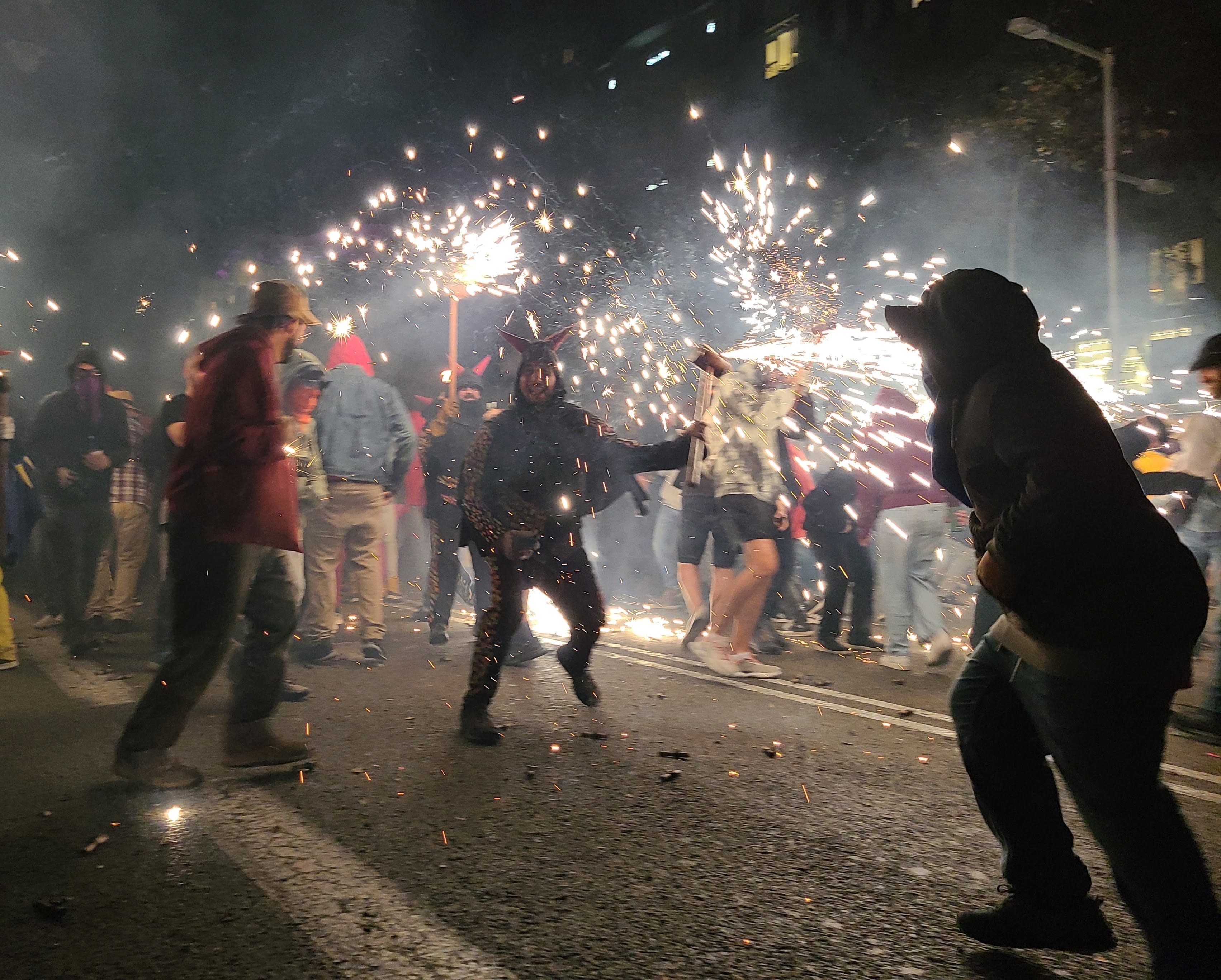
Boundaries blur as the crowd intertwines with the parade. Fire devils aggressively spray sparks at people standing too close. If they think you want a good photo, they will attack, firing sparks at you, the perfect photo op that may or may not set your hair on fire.
If you’re not a big fan of noise, explosions and the potential for third-degree burns, you really don’t want a front row seat to the correfoc. On the other hand, screw it. Wear long sleeves and a hat. Embrace the legends of the devils. Get in there and dance with fire.
You can find more information about this year’s La Mercè here. (One annoying Barcelona habit: they don’t release the full program until days before the start of the festival.)
Each year the festival chooses the work of a local artist for the La Mercè poster. Here is more info on this year’s winner.

My favorite piece of yours so far! Love your way with words in this one. You had me laughing.
I laughed reading some of your descriptions. La Mercè has grown a lot since my youth in Barcelona. In the 80s and 90s a big component was a whole month —mid September to mid October— of free concerts and shows that you could see at the Greek Theater, Plaza del Rey, etcetera. Do they still do that?