
Inside a Rarely Seen Modernist Mansion
Puig i Cadafalch designed a palace for the Baron de Quadras to show off.

To many Barcelona tourists, Josep Puig i Cadafalch is the guy who designed that really cool mansion next door to Casa Batlló, Gaudi’s main street masterpiece. Millions of travelers have stared in awe at the Gaudi house and its swirling facade, and then glanced to the left and said something like, “wow, what’s up with that place?”
The “place next door” is Casa Amatller, a classic example of the can-you-top this competition that was raging on swanky Passeig de Gracia in the early 1900s. A renovation of an existing building, Puig i Cadaflach’s Casa Amatller finished first, changing the dynamic of the street with its colorful, code-bashing façade filled with symbols reflecting the building’s owners. (In 1906, Gaudi followed with Casa Batlló, followed a few months later by Lluís Domènech i Montaner’s extravagant Casa Lleó Morera, on the other side of Casa Amatller.)

Along with his peers — known as the “Big Three” of Barcelona modernists — Puig i Cadafalch helped shape the city’s aesthetic and the emerging ideas of art nouveau and modernism, even though his name might not be as well known around the world. His work leaps from the cityscape, full of towering Gothic and medieval references.
Puig i Cadafalch’s passions and influences were much different than his peers. Gaudi was a zealot consumed by expressing nature and paying tribute to God. Domènech was an academic and politician who borrowed ideas from everywhere. Puig i Cadafalch was a historian and staunch Catalan nationalist who looked to express Catalan traditions while embracing the form-busting modernist ideals.
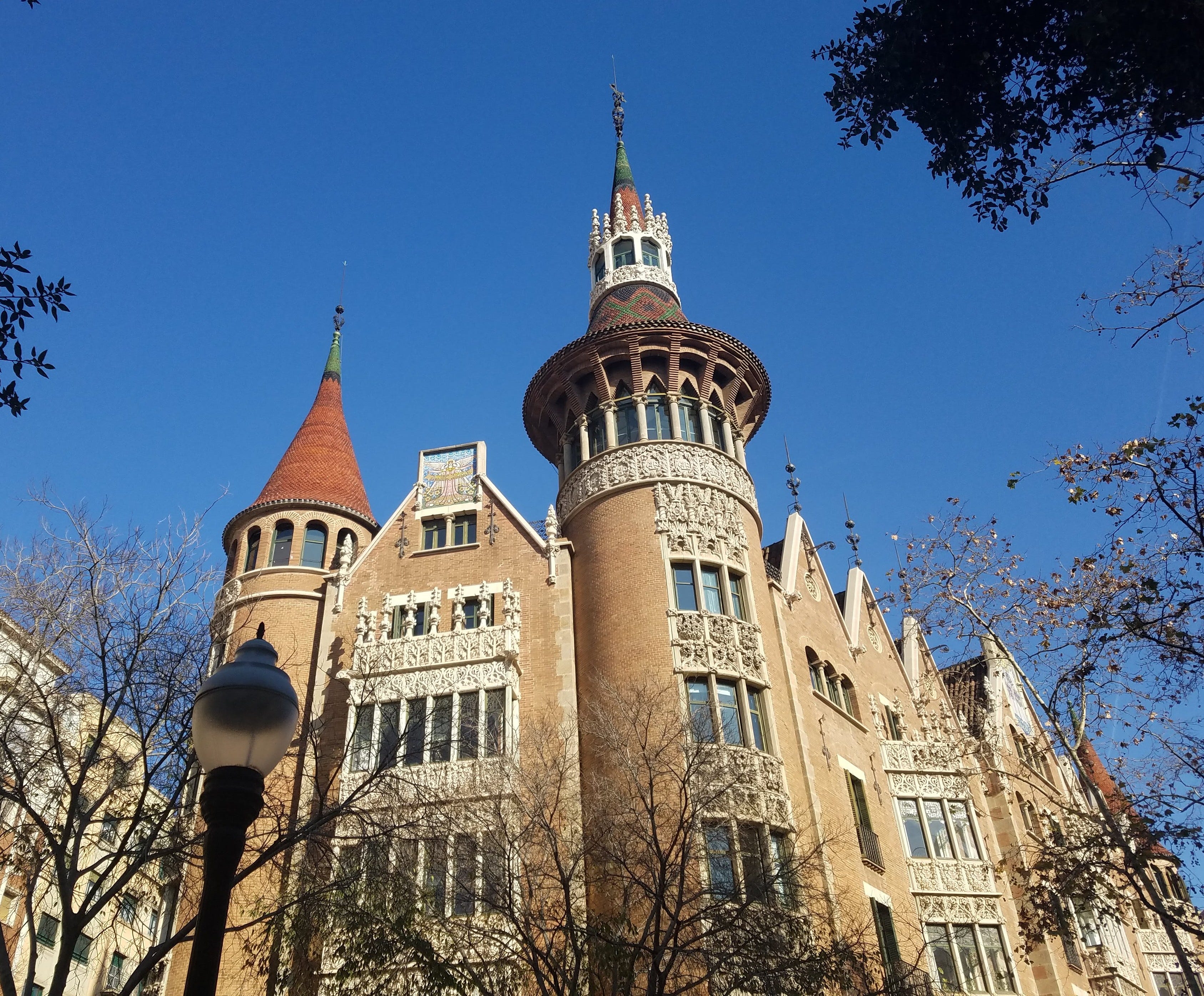
Puig i Cadafalch’s most recognizable work is, like Casa Amatller, a dramatic building in the heart of the city that few people know much about. The spires of Casa de les Punxes loom above a key intersection on Diagonal, the bustling boulevard that cuts through the city center. On a triangular lot, Puig i Cadafalch created a residential block for three sisters in a glamorous medieval fantasy castle topped by six spiked turrets that might look at home in a Bavarian forest.
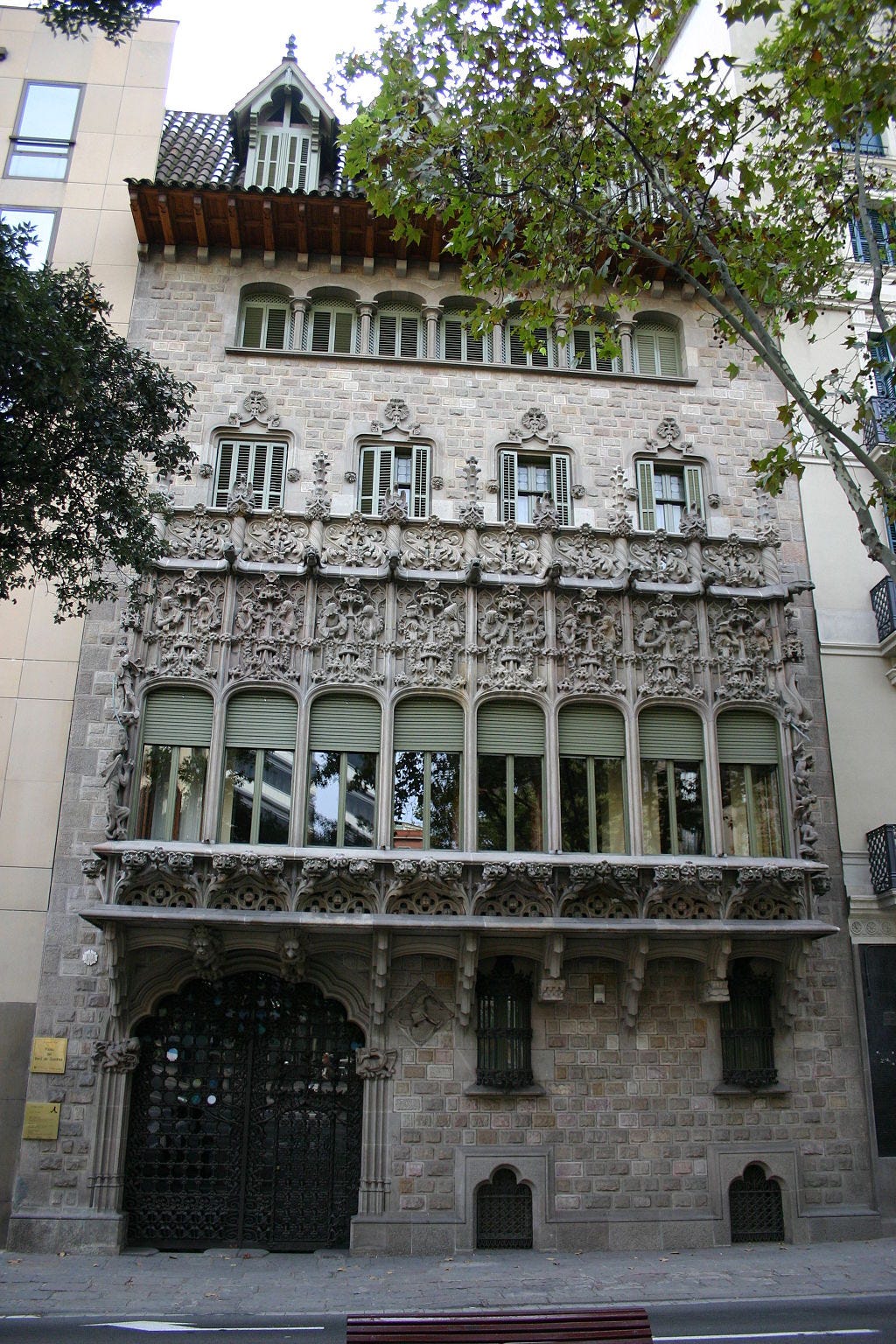
One of Puig i Cadafalch’s lessor known works is right across the boulevard, unnoticed by the tour buses. A few years ago, Palau del Baró de Quadras, a private residence designed by Puig i Cadafalch in 1903, was opened to the public for short tours one day a week as part of a citywide effort to open more of the old mansions to the public. The program is managed by Casas Singulares; as of this writing it is open on Fridays.
Commissioned before the competition on Passeig de Gracia, Palau del Baró de Quadras was designed as the home for the Baron de Quadras, an industrialist who scored big in textiles (primarily wool.) The hardcore neo-Gothic façade fronting Diagonal, with its ornate balcony, carved figures and occasional gargoyle gave the Baron a show palace on the busy throughfare. (The opposite site of the building has a much different, more sedate residential façade.) The owners “were showing off, absolutely,” the tour guide says.
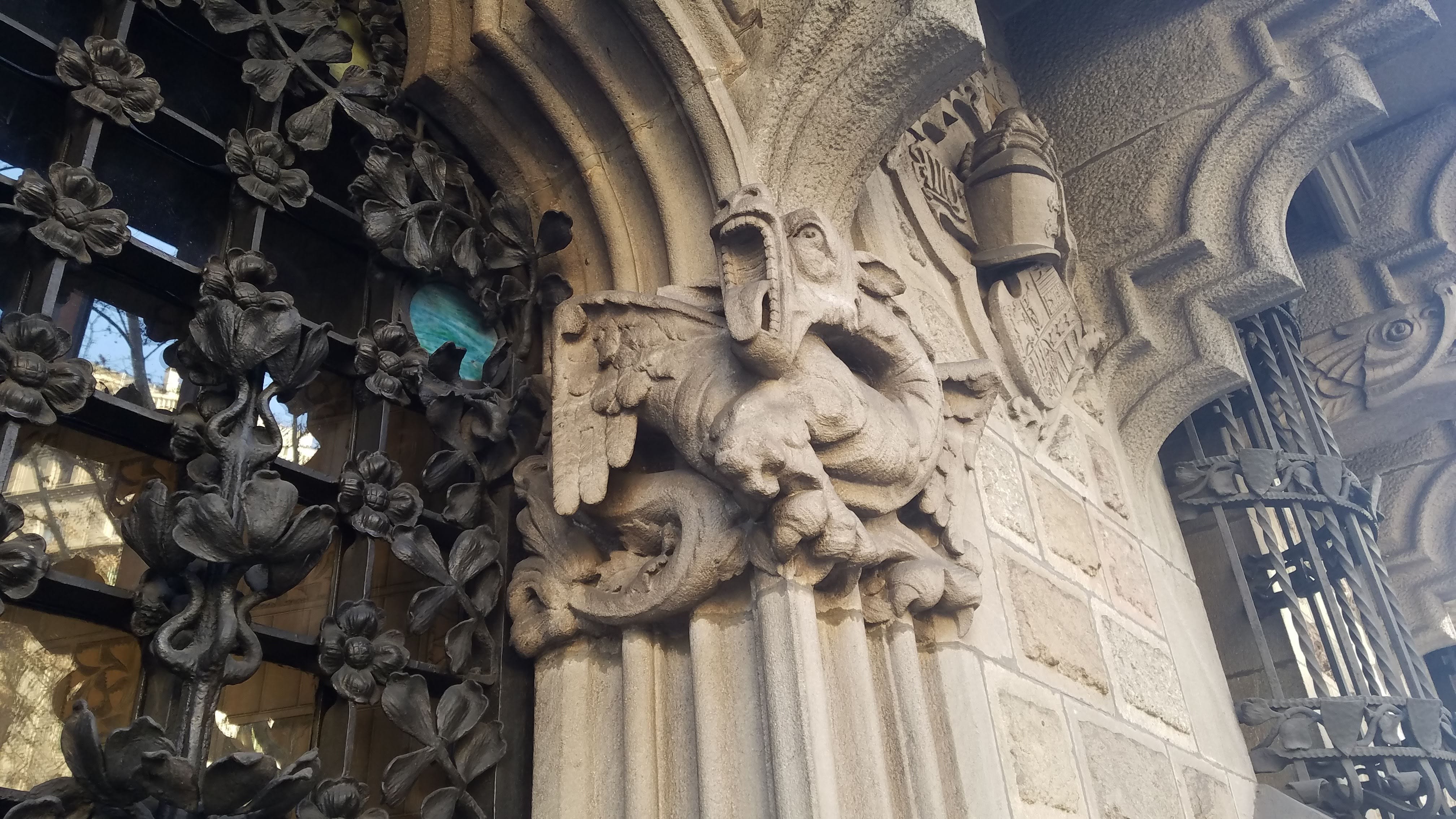
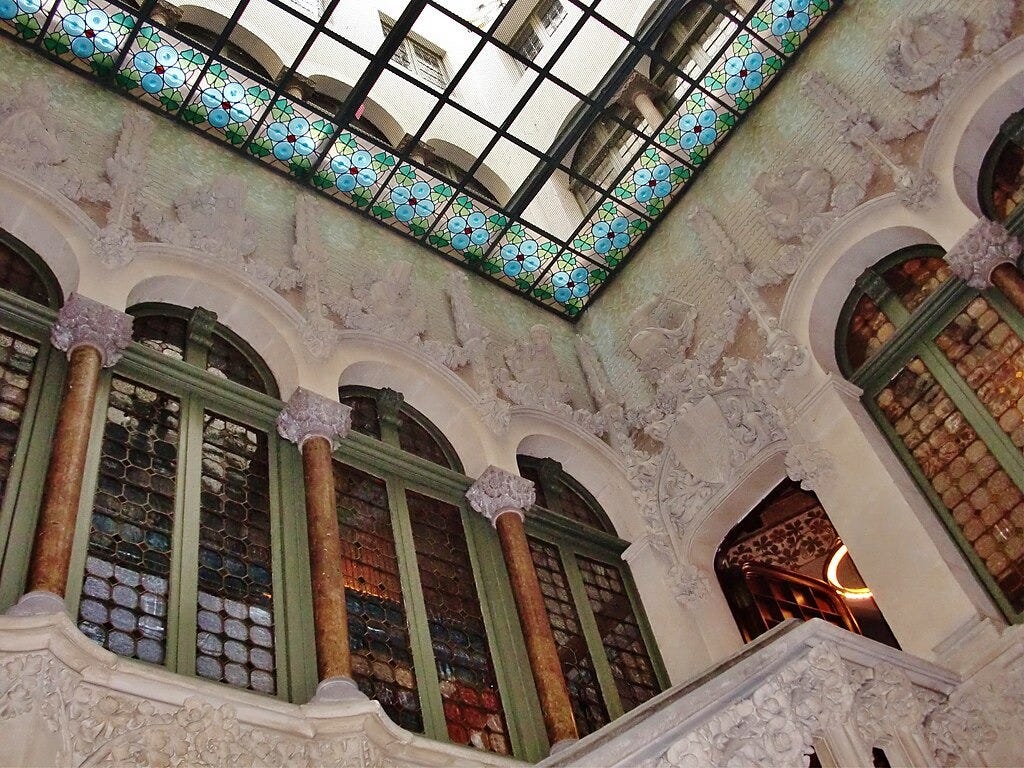
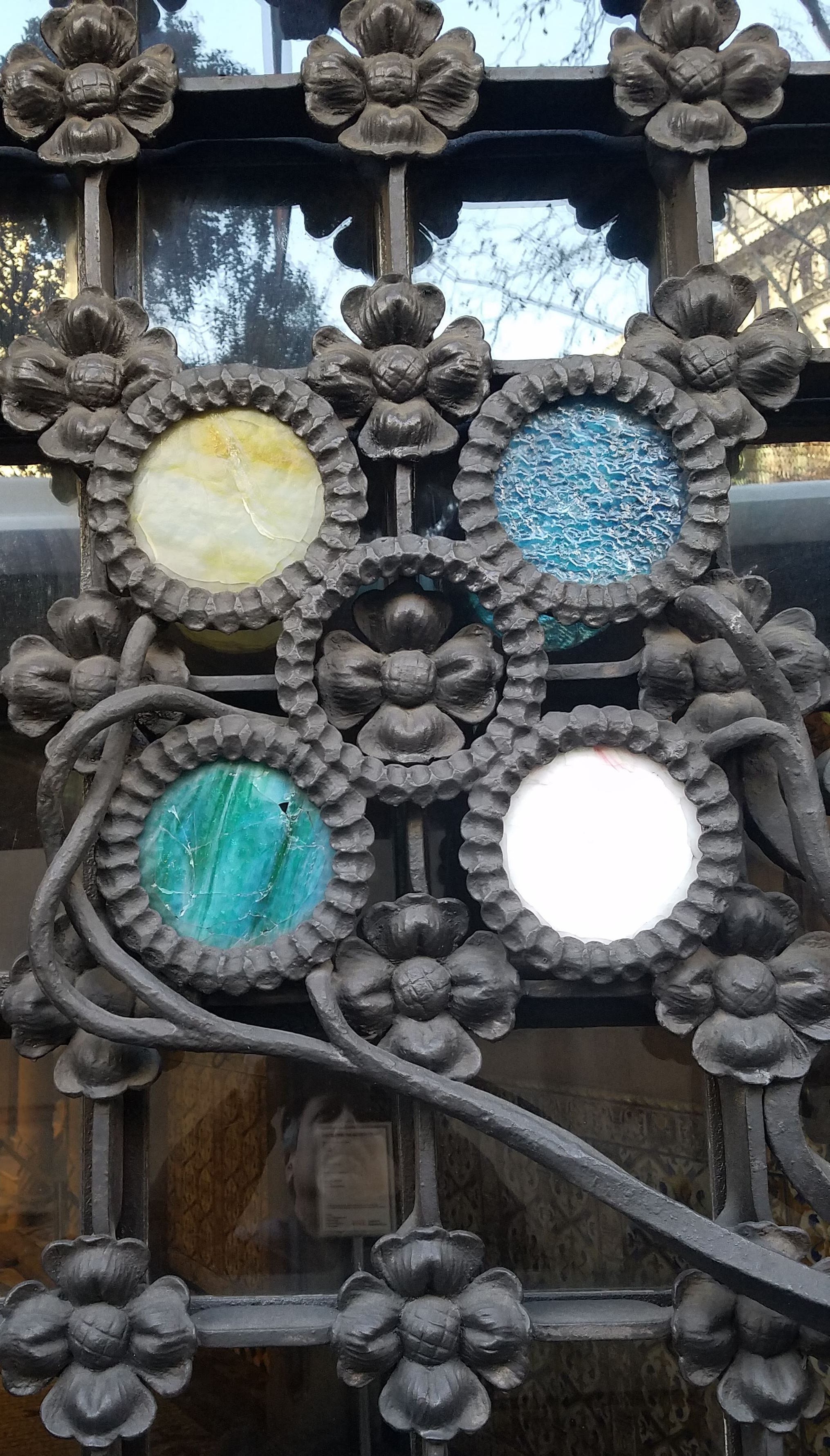
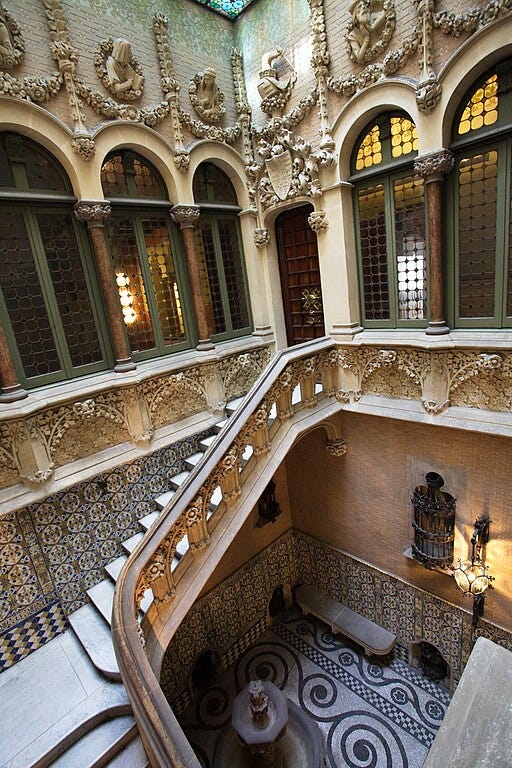
In the early 1900s, Catalan was home to many of the world’s best craftsmen, and Puig i Cadafalch took full advantage of their skills. The mosaic floor, stonework and ornate iron work are typical of the creative explosion happening in the city at the time. The grand staircase is topped with an intricate stained-glass ceiling.
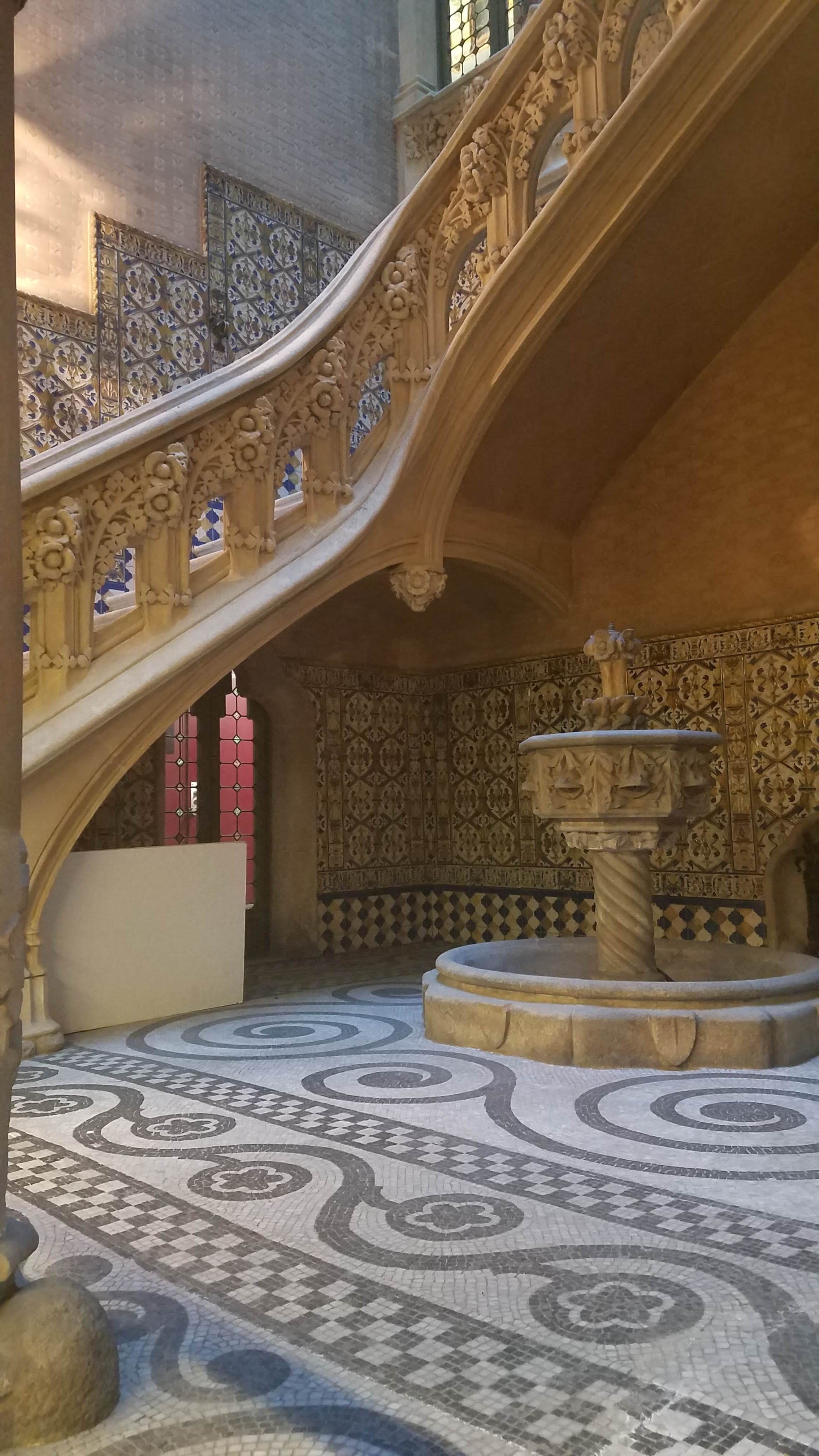
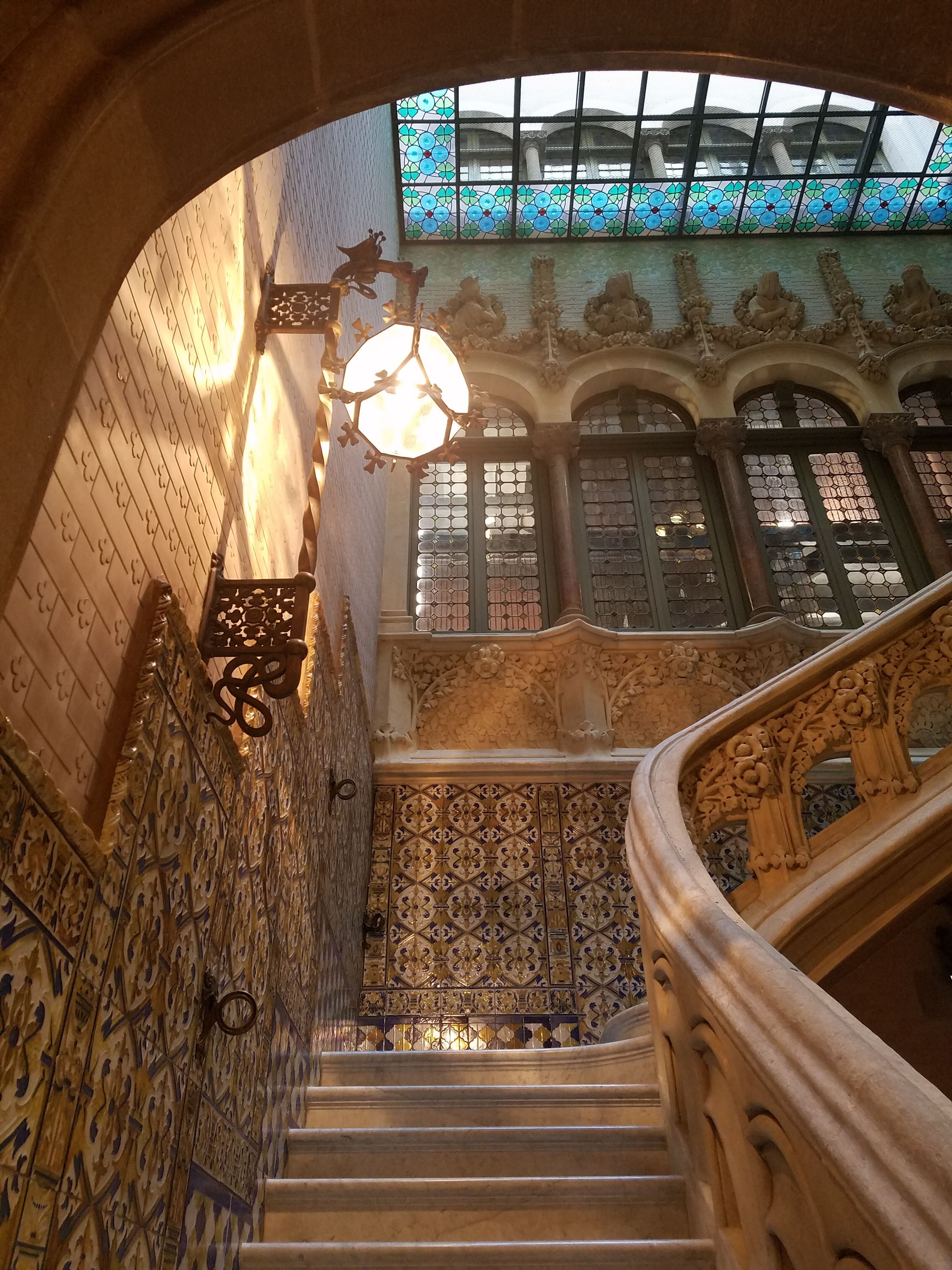
The iron details and colorful tiles help make the building very Catalan.
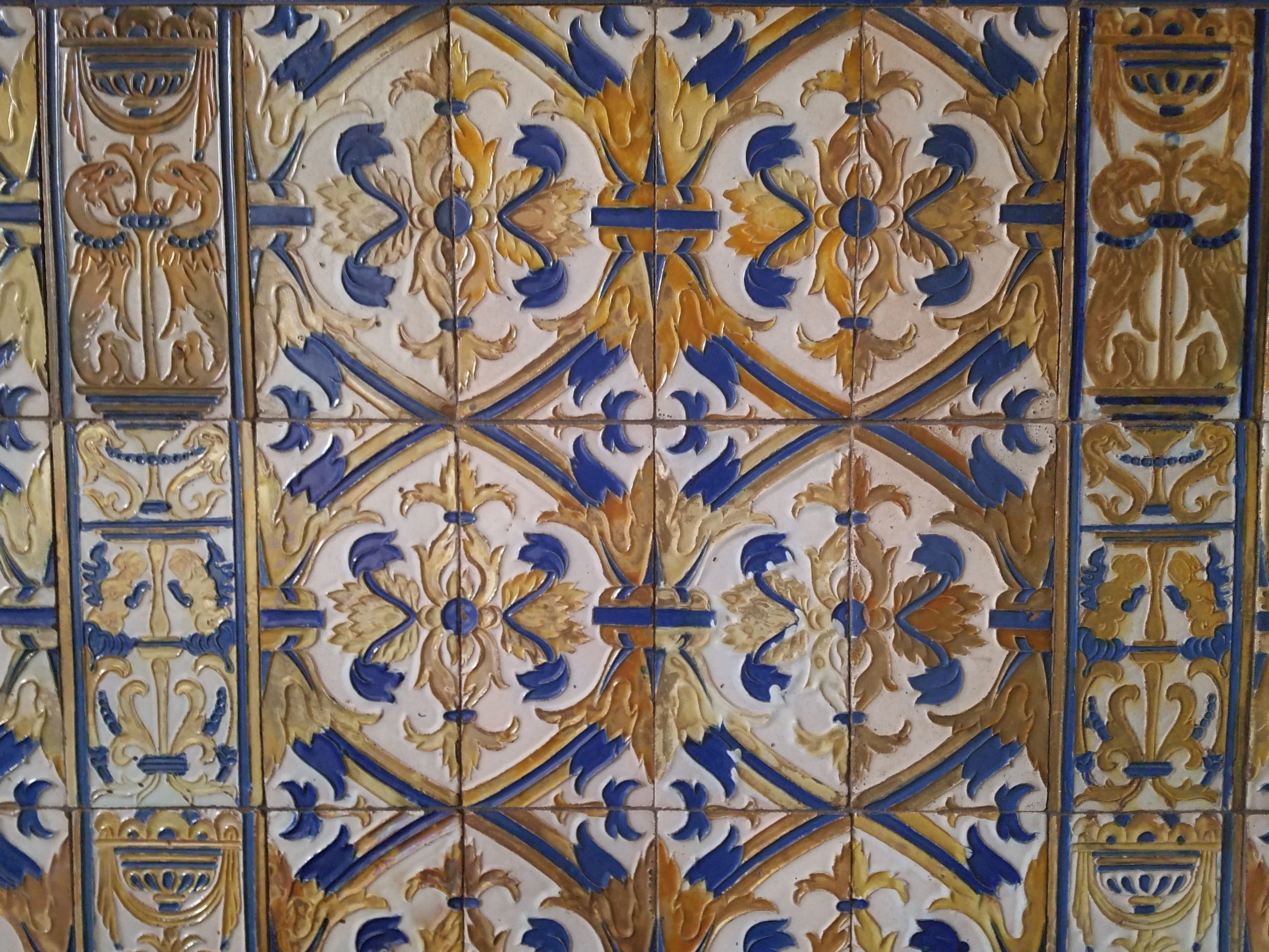
A mishmash of influences typical of the modernists can be found throughout the house, from the grand columns to the colorful details. The Palau was a job for hire, and it certain reflects the perspective of the client, the Baron, as much as the vision of the architect. Two rooms from the opulent living quarters were preserved, including the columns and grand fireplace.
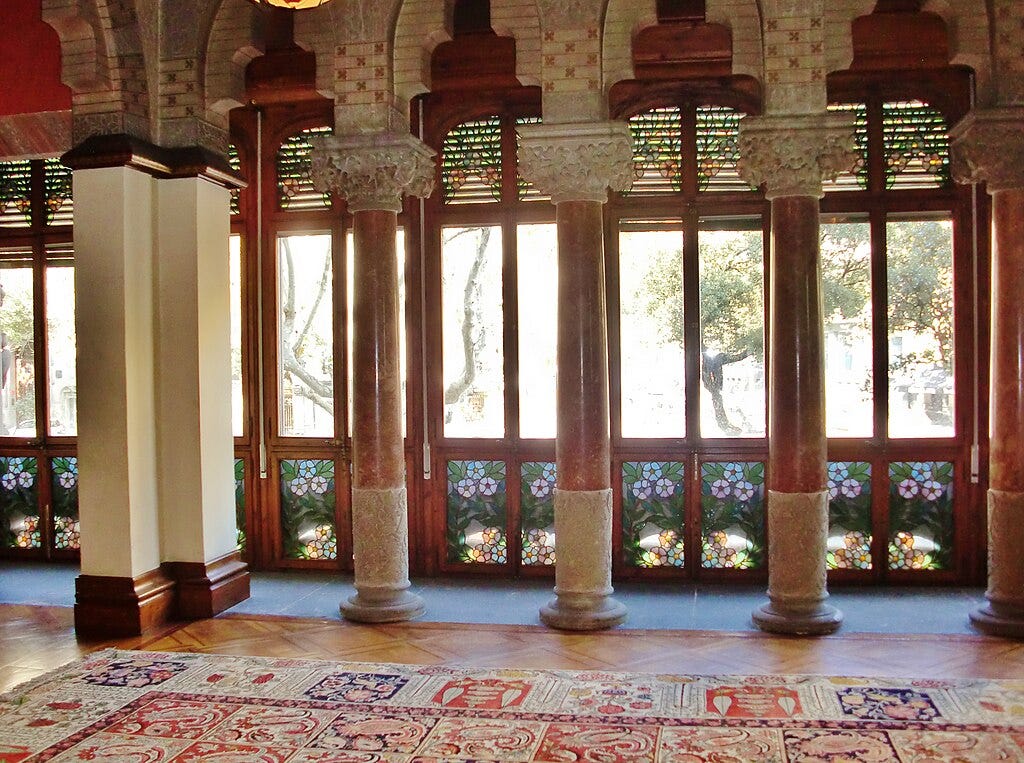
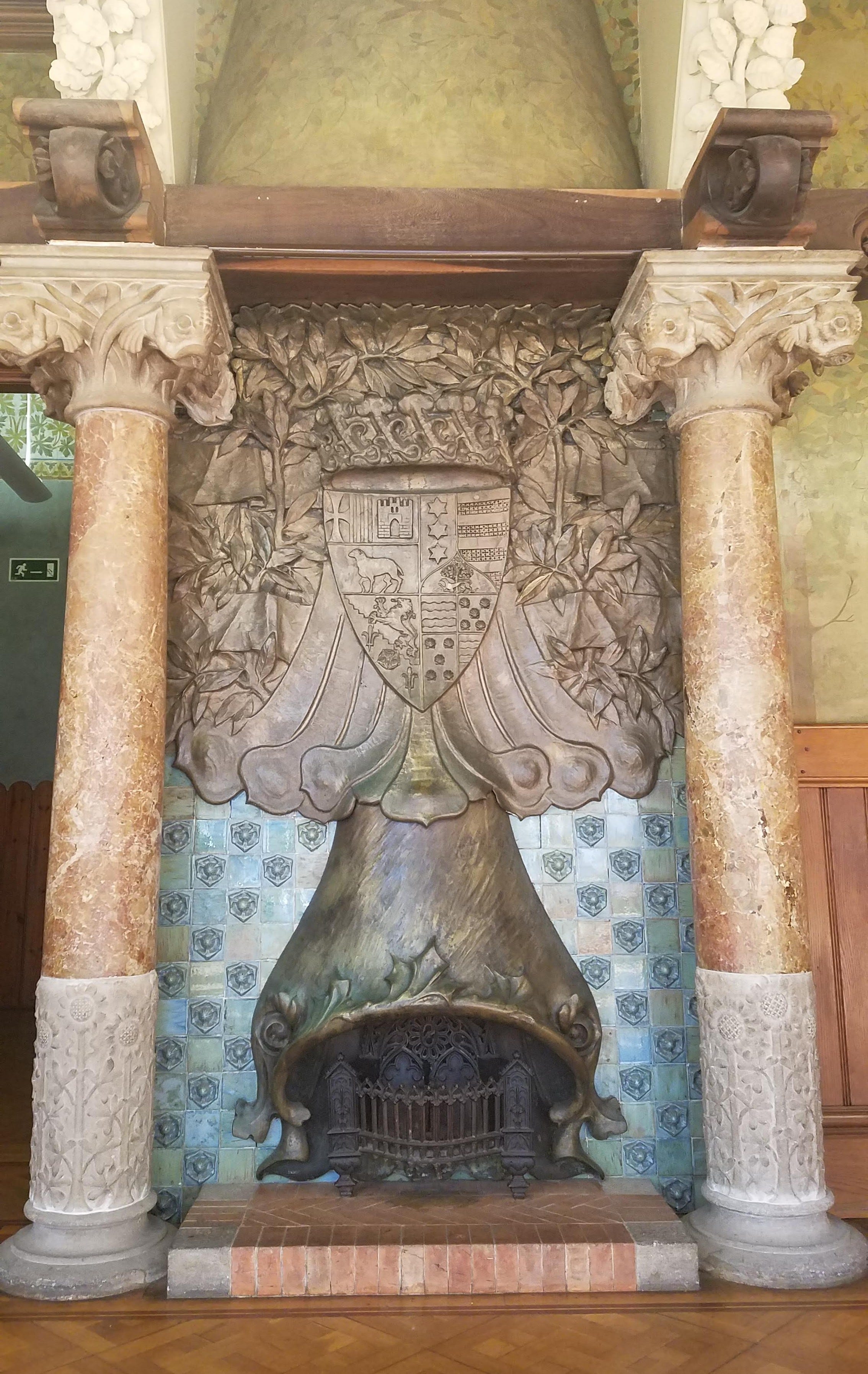
The building has been restored a couple of times, and it’s been used for different functions over the years. Today it is a working office, home to the Institut Ramon Llull, an agency focused on promoting Catalan culture.
Get tickets and info at Cases Singulars.
Fascinating to hear about one of Barcelona’s “other“ architects! Thanks for sharing! I remember going to Casa Batlló, looking at the building next door as you described, and never going in.