

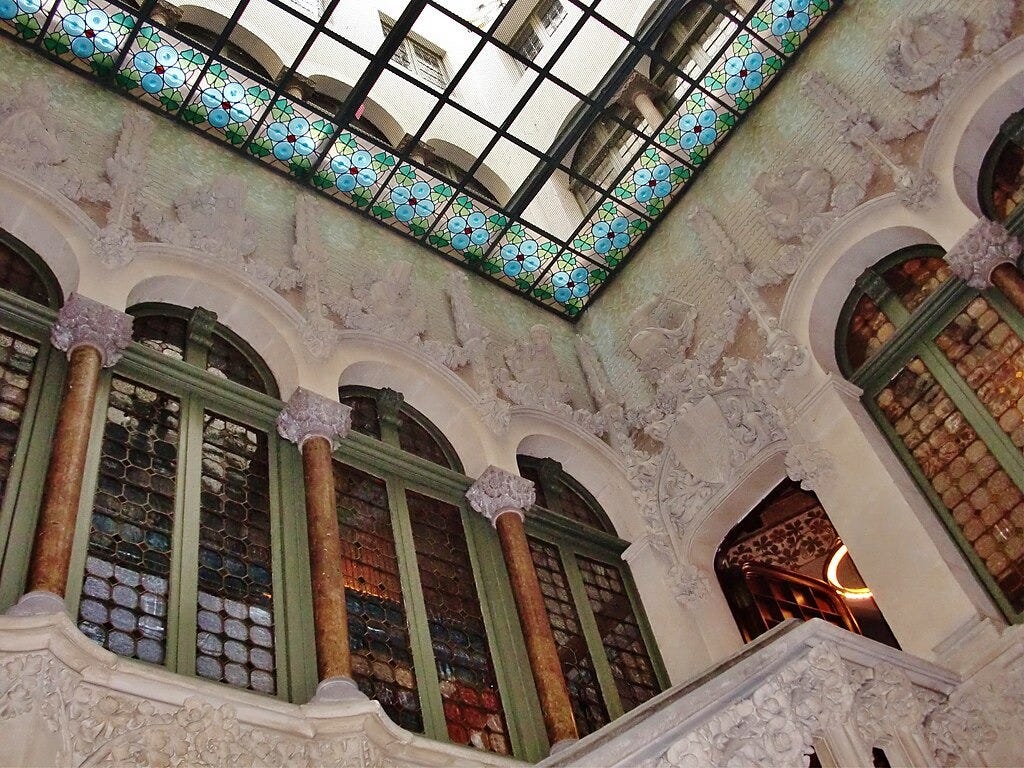
To many Barcelona tourists, Josep Puig i Cadafalch is the guy who designed that really cool mansion next door to Casa Batlló, Gaudi’s main street masterpiece. Millions of travelers have stared in awe at the Gaudi house and its swirling facade, and then glanced to the left and said something like, “wow, what’s up with that place?”
The “place next door” is Casa Amatller, a classic example of the can-you-top this competition that was raging on swanky Passeig de Gracia in the early 1900s. A renovation of an existing building, Puig i Cadaflach’s Casa Amatller finished first, changing the dynamic of the street with its colorful, code-bashing façade filled with symbols reflecting the building’s owners. (In 1906, Gaudi followed with Casa Batlló, followed a few months later by Lluís Domènech i Montaner’s extravagant Casa Lleó Morera, on the other side of Casa Amatller.)

Along with his peers — known as the “Big Three” of Barcelona modernists — Puig i Cadafalch helped shape the city’s aesthetic and the emerging ideas of art nouveau and modernism, even though his name might not be as well known around the world. His work leaps from the cityscape, full of towering Gothic and medieval references.
