

At some point in your early visits to Barcelona you will almost certainly find yourself searching for a flamenco show. It’s one of those unavoidable experiences, like a trip to Sagrada Familia or dealing with a surly Catalan waiter.
If a trip to Spain would not be complete without a stage-pounding flamenco experience than you definitely should do it. Flamenco is engrained in Barcelona tourist culture, one of the attractions, a stop on the tour. Check out the big church, hit a Gaudi house, eat some paella and catch flamenco at night, the check list of the in-and-out Barcelona tourist.
Purists will note that flamenco (like paella) really doesn’t have much to do with Barcelona. The movements and lore of flamenco grew out of Andalusia and its very specific mix of cultures. Going to Barcelona to see flamenco is akin to flying to Boston to hear New Orleans jazz.
It doesn’t matter. Once you, a spouse or significant other decides they must see flamenco, there is no way out of it.

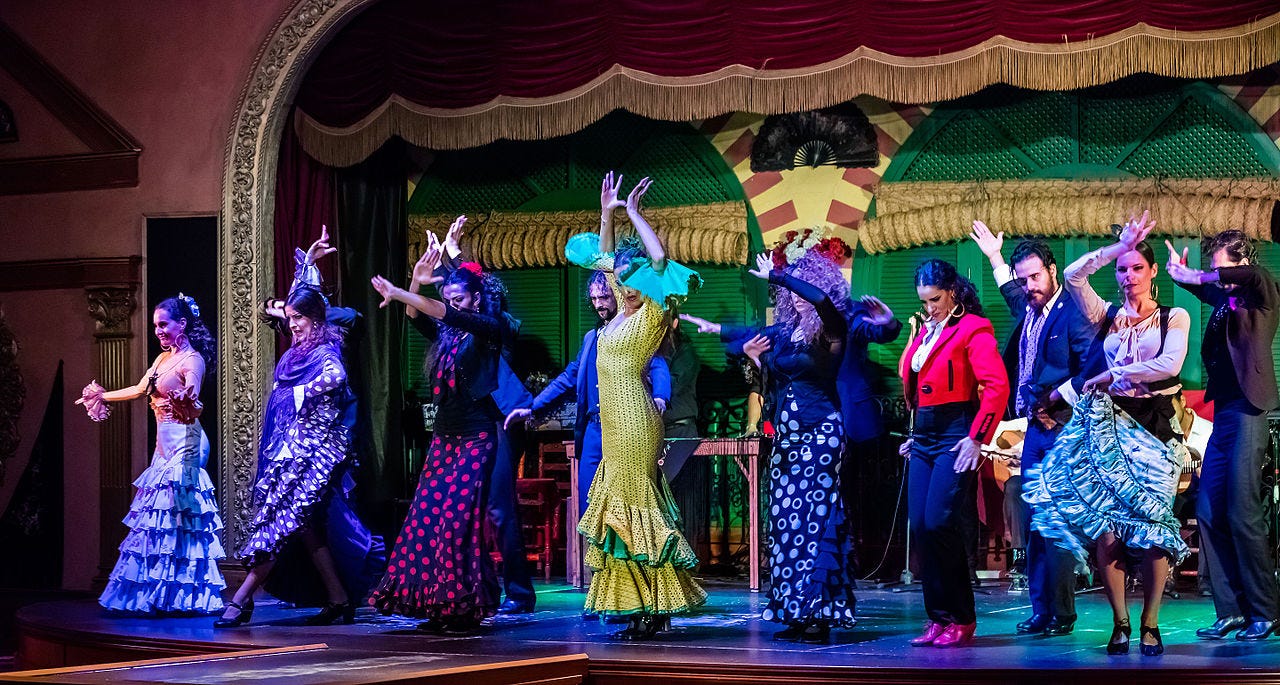
There are a dozen regular flamenco shows in downtown Barcelona catering to this obsession. For the most part, they are remarkably similar. A few smoldering, boot-stomping, skirt-swirling dances by slightly bored men and women practiced at the art of looking longingly into each other’s eyes is intermixed with interludes by finger dancing guitarists. As the show builds, the dancers whip the crowd into a frenzy with handclapping and dramatic swirling, invoking images of passionate nights and bitters feuds in far off Spanish locales.
You really can’t go wrong.
And, at this point, I should acknowledge that I’m really not the guy to give insightful analysis into finding the proper flamenco experience for you. I love flamenco and appreciate the artistry and all that but, full disclosure, I have no idea which show best captures the authentic flamenco legends with the most talented performers in the best venue. Anybody who says they can rate the shows is probably selling you something. Your interests, goals and schedules will vary.
Yet, I can definitely offer some advice on how to approach this search, based on personal experience and general flamenco scuttlebutt.
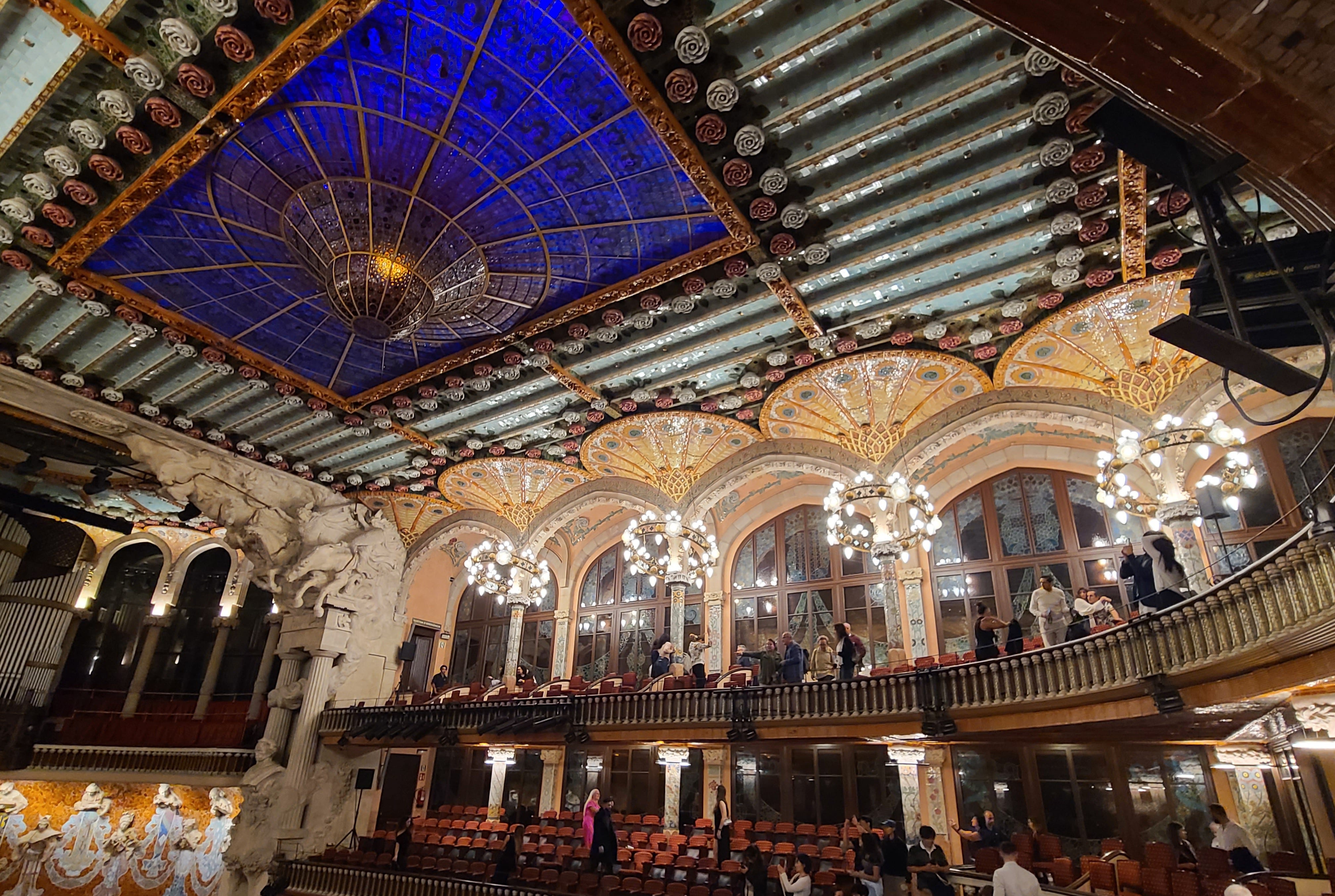
For one, I would start and hopefully end any quest for flamenco at the Palau de la Música Catalana. Designed by Lluís Domènech i Montaner in 1908, the glorious theater is one of the city’s modernist masterpieces and still an active concert venue that regularly hosts flamenco shows, featuring top dancers, singers and guitarists.
With the Palau program, you know the quality will be top notch. And the possibility to cross off flamenco and a visit to the Palau from your to-do list in one night is a big win. If you have the opportunity, a Palau flamenco show is the way to go.
Beyond the Palau, the choices get a little murkier. But there are still reasonable guidelines that anyone familiar with the hot Barcelona flamenco scene would definitely support.
As a rule, you might avoid any flamenco place that regularly hosts tour groups. Nothing against tour groups and cruise ship passengers, but it definitely kills the cool vibe when a busload of flamenco-crazed seniors arrives.
This leads to a corollary rule, which may or may not be true, but I’ll go with it anyway: avoid shows that offer dinner. I’ve done it twice, under duress, and I never came away thinking, “yum, that was a great dinner.” Plus, the clack and clanks of a busy dinner service is not really conducive to the sultry-deep-in-an-Andalusia-tavern atmosphere you want in your flamenco experience.
A few smoldering, boot-stomping, skirt swirling dances by slightly bored men and women practiced at the art of looking longingly into each other’s eyes is intermixed with interludes by finger dancing guitarists.
While internet dance experts will debate the quality and style of the different shows and performers, one of the best and easiest to endure is Tarantos, a nightly program in a small theater in Placa Real, the famous old square off La Rambla. Tarantos is billed as “the oldest flamenco tablao in Barcelona,” although it only opened in 1963, which speaks volumes about the historic role of flamenco in Barcelona.
The Tarantos show is known for attracting some of the best musicians and performers in town and the intimate setting — maybe 50 people — allows a close-up experience. Best of all, the show is a crisp 40 minutes or so, which scientists have shown is the psychological limit of peak flamenco enjoyability. It also ensures that flamenco doesn’t suck up your whole night. Shows fill up fast, but you can buy tickets online or queue at the box office starting at 8 p.m.

(Side note for guitar fans: not far from Placa Real, in the heart of the Gothic Quarter, the 14th Century Basilica of Santa Maria del Pi, regularly hosts concerts with some of the best flamenco guitarists in the city.)

Beyond these basic staples of Barcelona flamenco, it’s hard to sift through the blizzard of “flamenco extravaganzas” and “nights of passion” advertised to tourists. For guidelines, mid-size venues tend to be a better bet than huge theaters or tiny places. And it’s always a good sign when shows advertise the names of their performers — it suggests the performer is in demand around the city.
Certain shows pop up over and again on review lists. The Tablao de Carmen scores points for hosting shows in a theater that actually looks and feels like an old tavern. It’s in Poble Espanyol, a fake Spanish village on Montjuic created in 1929 to showcase the culture of different regions. It is a dinner show, so it’s already shredding the rules, but it does get consistently good reviews. And your ticket lets you wander around Poble Espanyol, so it’s got that going for it.

Closer to the Gothic Quarter, there are several large old theaters offering regular flamenco shows. The City Hall Theater, just off Placa Catalunya is one of the best and considered one of the more affordable. The show clocks in at a crisp one hour and, best of all, you can purchase tickets that include drinks.
For a venue with more of a vibe, one of the more established regular shows is hosted in the Palau Dalmases, an ornate 17th-century mansion in the heart of El Born, is hard to beat. The atmosphere is great and the fast-paced one hour show fits nicely into an evening in the old city. Organizers claim to recruit the “best flamenco artists in the world.” You can get a drink; an optional dinner is offered after the show.

For a place a little off the beaten path, Casa Sors caught my eye, and it consistently gets good reviews. I can’t vouch for the show, but I like that it includes a “museum” of flamenco guitars. Casa Sors is billed as a family business founded in 1972 with “more than 50 years of musical and guitar tradition.” It also claims to the “best-rated” show in Barcelona. It’s located on Consell de Cent, the pedestrian street off Passeig de Gracia.

There you have it. Insights. All sorts of options. From here, you’re on your own. I hope you find the pulse-pounding, castanet-snapping dance and guitar experience of your dreams.
Planning a trip to Barcelona? Subscribe to Barcelona Travel Tips.
You should consider writing a book about Barcelona so we could have this great info in one place!
Hi, trust all going well. Here’s a link to one of my favourite films. In my opinion one of the best films set during the Spanish Civil War — far better, I think, than Ken Loach’s Land & Freedom.
Took me years to track down a version with reliably good English subtitles.
When you get a couple of hours you may enjoy it. All the best.
https://kolektiva.media/w/o63vDgbG8ScSnsdqRggyiU